Why gym flooring matters more than you think
Drop a 35 lb kettlebell on bare hardwood from waist height. The dent is permanent. The sound carries through the floor to the unit below. The kettlebell bounces unpredictably. All three problems disappear with the right flooring, and the cost of proper gym flooring is a fraction of the cost of replacing a hardwood floor or losing a security deposit.
Gym flooring also changes how exercises feel. Bare concrete is hard on joints during burpees, planks, and anything involving knees or elbows on the ground. Carpet is soft but unstable for heavy lifts. The right gym surface provides enough cushion to protect joints, enough firmness to stabilise heavy lifts, and enough grip to prevent equipment from sliding.
Types of home gym flooring
Interlocking foam tiles (EVA)
The most popular option for home gyms. BalanceFrom interlocking foam tiles are 3/4 inch thick, come in packs of 6 (24 sq ft), and puzzle-piece together without adhesive. They cushion bodyweight exercises, reduce noise, and protect floors from light to moderate impact.
Limitations: heavy weights compress the foam permanently. A loaded barbell leaves divots. Foam also shifts on smooth floors unless you tape the edges or place the tiles wall-to-wall. For yoga, bodyweight training, and light dumbbell work, foam tiles are excellent. For heavy lifting, they are a base layer, not the whole solution.
Rubber tiles and rolls
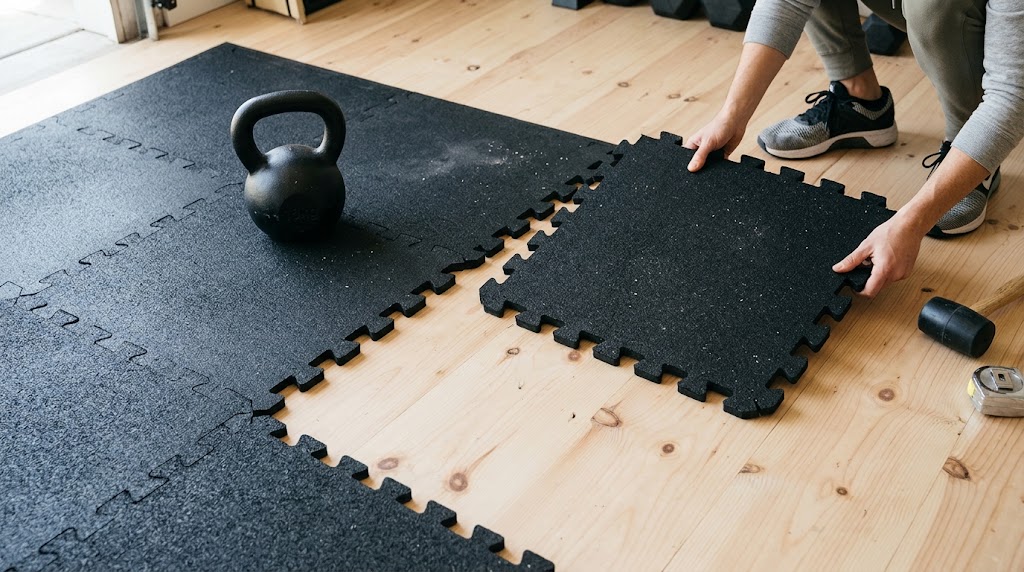
ProsourceFit rubber tiles are denser than foam, handle heavier loads, and last longer. Rubber does not compress permanently under a squat rack the way foam does. It absorbs impact noise better than foam for heavy drops. The trade-off is weight (rubber tiles are significantly heavier) and a distinctive rubber smell that takes 1 to 2 weeks to off-gas in a ventilated space.
Rubber rolls (4 by 6 feet, 3/8 to 3/4 inch thick) eliminate the seams of interlocking tiles. They lay flat, stay put, and handle everything from deadlifts to burpees. The horse stall mat from a farm supply store (4 by 6 feet, 3/4 inch) is the same product at roughly half the price of gym-branded rubber. It works identically.
Hybrid: foam base plus rubber top
For the best noise reduction in apartments, layer foam tiles on the bottom with a rubber mat on top. The foam absorbs vibration. The rubber provides a stable, durable surface. This combination reduces noise transmission by 40 to 60 percent compared to rubber on bare floor, and it prevents the foam from compressing under heavy equipment.
How much space do you actually need?
The minimum usable gym floor space is 6 by 6 feet (36 sq ft). That fits a yoga mat, a set of dumbbells, and room to do lunges, push-ups, and rows without hitting furniture. For a more complete setup with a bench or rack, 8 by 8 feet (64 sq ft) is workable. A full-featured home gym with a rack, bench, and barbell wants 10 by 10 feet minimum.
Measure your space, then buy tiles to fill it wall-to-wall if possible. Wall-to-wall coverage prevents tiles from shifting during lateral movements. If you cannot cover the whole floor, at least cover the area where your feet plant during heavy lifts.
Apartment-specific considerations
Noise transmission
Impact noise travels through floors as structure-borne vibration. The thicker and softer the material between the impact and the floor, the less noise transmits. For apartments above other units, 3/4 inch is the minimum effective thickness. Layering foam under rubber doubles the noise reduction.
If you do any exercise that involves dropping weights (deadlifts, cleans, snatches), you need at minimum 1.5 inches of combined flooring. Our apartment noise guide covers this in detail.
Floor protection
Rubber and foam both protect hardwood and laminate from scratches, dents, and equipment marks. But some rubber mats can stain light-coloured floors over time. Place a plastic sheet or old bed sheet under rubber mats on light hardwood as a barrier. Check after the first week for any colour transfer.
Moisture and cleaning
Foam tiles absorb sweat if it pools in the seams. Rubber does not. For a sweaty workout space, rubber is more hygienic. Wipe rubber down with diluted vinegar weekly. For foam, pull tiles apart monthly and clean the edges where moisture collects.
Cost comparison
| Type | Cost per sq ft | Thickness | Best for |
|---|---|---|---|
| EVA foam tiles | $1.00 to $1.50 | 1/2 to 3/4 in | Bodyweight, yoga, light weights |
| Rubber tiles | $1.50 to $3.00 | 3/8 to 3/4 in | Moderate to heavy weights |
| Rubber rolls | $1.25 to $2.50 | 3/8 to 3/4 in | Large areas, heavy lifting |
| Horse stall mats | $1.00 to $1.75 | 3/4 in | Heavy lifting, deadlifts |
A 6 by 8 foot area (48 sq ft) costs $48 to $72 in foam tiles, or $72 to $144 in rubber. For most apartment home gyms, ProsourceFit EVA foam tiles at 1/2 inch provide a good balance of cost, cushion, and portability. For heavier training, spend the extra on rubber.
Bottom line
Gym flooring is not optional for apartment training. It protects your floor, reduces noise, cushions your joints, and stabilises your equipment. Start with foam tiles for a bodyweight and light dumbbell setup. Upgrade to rubber when the weights get heavy. And if you train above a neighbour, layer both for the best noise reduction you can get without pouring a concrete slab.