The scale of the problem
Obesity is not a niche concern. It is one of the most pressing health crises of our time, and the numbers continue to worsen.
According to CDC data released in September 2024, 23 US states now have adult obesity rates at or above 35%. Before 2013, not a single state had reached that threshold. Currently, at least one in five adults in every US state is living with obesity. Globally, the World Health Organization reports that obesity has more than tripled since 1975, with over 890 million adults classified as obese worldwide as of 2022.
The health consequences are well-documented: Type 2 diabetes, cardiovascular disease, certain cancers, sleep apnoea, joint problems, and mental health conditions including depression. The economic costs are staggering too. The CDC estimates that obesity-related medical costs in the US exceed $170 billion annually.
Behind these statistics lies a complex web of causes: processed food environments, sedentary lifestyles, economic pressures that make cheap calories more accessible than fresh food, and a food industry that has spent decades optimising products for overconsumption. This is not simply a matter of individual willpower, though personal choices obviously matter.
Why home exercise is part of the solution
One of the most persistent barriers to regular exercise is access. Gym memberships cost money. Commuting to a gym takes time. Walking into a gym can be intimidating, especially for someone who is overweight and self-conscious about it.
Compact home equipment removes these barriers (see our compact strength guide and recovery accessories guide). A set of adjustable dumbbells, a resistance band set, and a foldable bench in a corner of your bedroom or living room eliminates the cost, the commute, and the social anxiety. You can train at 6 AM in your pyjamas or at 11 PM after the kids are asleep. No one is watching, no one is judging, and the equipment is always available.
This is not a trivial point. Research consistently shows that convenience is the strongest predictor of exercise adherence. Making exercise easier to start is more effective than finding the "optimal" programme.
Tuck & Train tip: If the barrier to starting is that you do not know what to do, begin with three movements: goblet squats with an adjustable dumbbell, band-resisted rows, and push-ups. Three sets of each, three days a week. That is enough to start building strength and establishing a habit. You can optimise later.
Enter the GLP-1 drugs
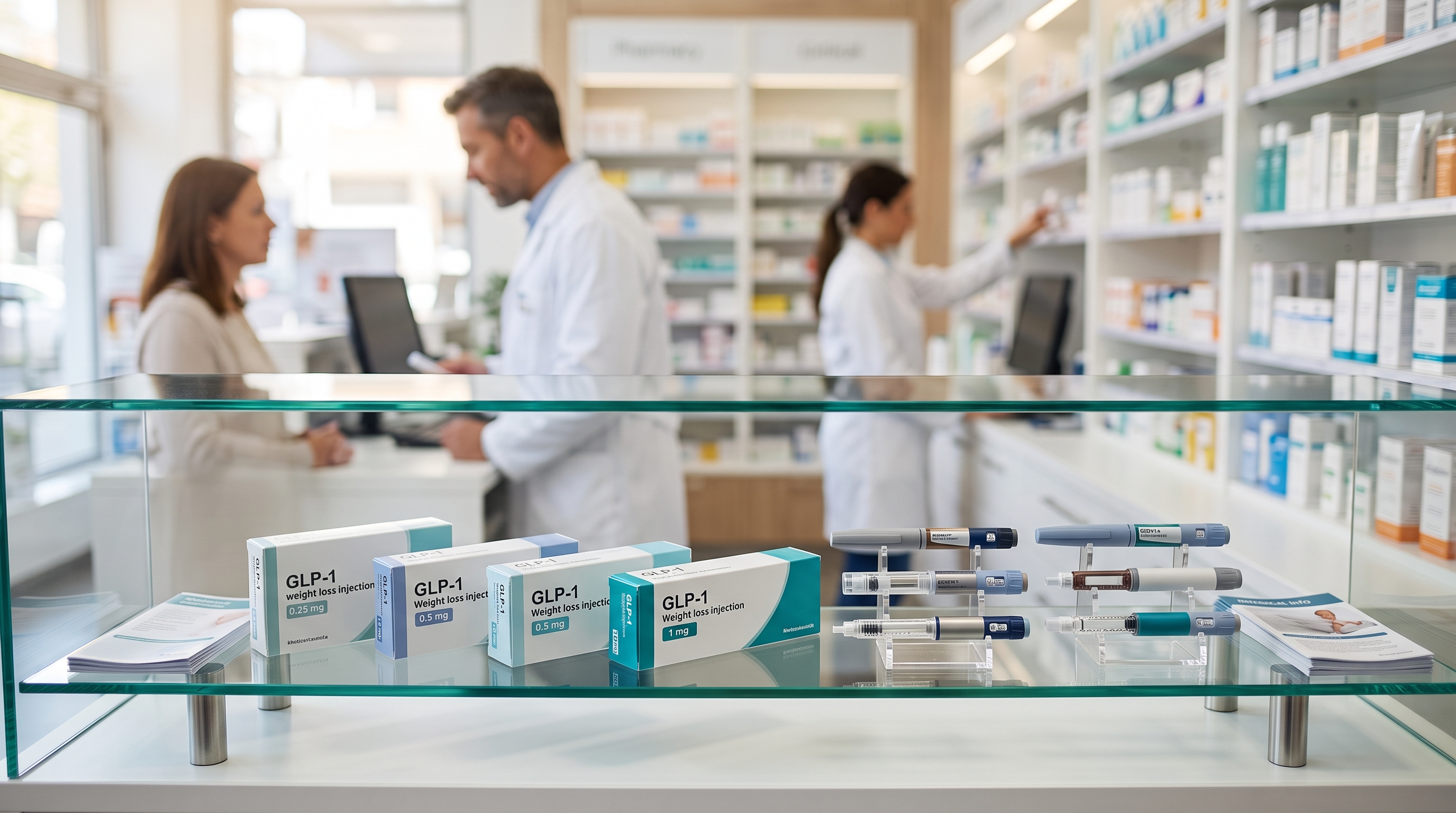
GLP-1 (glucagon-like peptide-1) receptor agonists were originally developed for Type 2 diabetes. They work by mimicking a gut hormone that signals fullness, slows stomach emptying, and improves insulin sensitivity. Patients taking these drugs eat less because they genuinely feel less hungry.
The weight loss results have been remarkable:
- Semaglutide (Wegovy/Ozempic): Clinical trials showed average weight loss of about 15% of body weight over 68 weeks. For a 100 kg person, that is 15 kg (about 33 lbs).
- Tirzepatide (Mounjaro/Zepbound): A dual GIP/GLP-1 agonist that has shown even greater weight loss, up to 22% of body weight in clinical trials. Zepbound was FDA-approved for weight loss in November 2023.
- Retatrutide: A triple agonist (GIP/GLP-1/glucagon) in late-stage clinical trials that has shown weight loss of up to 24% in Phase 2 data. Not yet approved but generating significant interest.
These results are genuinely unprecedented for pharmaceutical weight loss. Previous drugs rarely achieved more than 5 to 10% weight loss, and many were pulled from the market due to side effects.
The muscle loss problem
Here is where the story becomes directly relevant to anyone with a home gym.
When you lose weight through calorie restriction alone (which is essentially what GLP-1 drugs achieve by reducing appetite), you do not lose only fat. A significant portion of the weight lost is lean mass: muscle and bone density.
Studies of semaglutide have shown that roughly 25 to 40% of weight lost is lean mass rather than fat. For someone losing 15 kg on Wegovy, that could mean losing 4 to 6 kg of muscle. In older adults, this is particularly concerning because muscle loss accelerates age-related sarcopenia (the natural decline in muscle mass that begins around age 30) and increases the risk of falls, fractures, and loss of independence.
This has become one of the most actively discussed issues in obesity medicine. Researchers and clinicians are increasingly recommending that anyone taking GLP-1 drugs should simultaneously engage in resistance training to preserve muscle mass.
Tuck & Train tip: If you or someone you know is taking a GLP-1 weight loss drug, resistance training is not optional. It is the primary tool for preserving the muscle that these drugs would otherwise strip away. A pair of adjustable dumbbells and a set of resistance bands are enough to run a full-body programme that targets every major muscle group. Three sessions per week, 30 to 45 minutes each. A Fitbit Charge 6 can help you stay consistent by tracking workout frequency and intensity.
What the drugs do not fix
GLP-1 drugs are effective at reducing weight, but they do not address several factors that exercise does:
- Cardiovascular fitness: Weight loss alone does not improve your heart's ability to pump blood efficiently. Exercise does.
- Bone density: Weight-bearing and resistance exercise stimulates bone growth. Drug-induced weight loss without exercise can actually reduce bone density.
- Mental health: Exercise has well-documented antidepressant and anxiolytic effects that operate through different mechanisms than weight loss.
- Functional strength: The ability to carry groceries, climb stairs, play with your children, or get up from the floor without assistance. Drugs do not build this. Training does.
- Metabolic health: Exercise independently improves insulin sensitivity, blood pressure, and cholesterol profiles, even without weight change.
- Weight maintenance: Studies show that when patients stop GLP-1 drugs, they regain about two-thirds of the lost weight within a year. Exercise helps maintain weight loss long-term by preserving metabolic rate (which drops with muscle loss).
The rebound problem
This deserves its own section because it is perhaps the most important long-term concern with GLP-1 drugs. The STEP 1 extension trial of semaglutide found that participants who stopped the drug regained approximately two-thirds of the weight they had lost within a year. Their cardiometabolic improvements (blood sugar, blood pressure, cholesterol) also reversed.
This suggests that for many people, GLP-1 drugs may need to be taken indefinitely to maintain their effects. At current prices ($800 to $1,350 per month without insurance for Wegovy or Zepbound in the US), that is a significant long-term commitment. Supply has also been an issue, with periodic shortages since these drugs became popular for weight loss.
Exercise, by contrast, is free (or nearly free with basic home equipment), has no supply chain issues, no prescription requirements, and its benefits compound over time rather than disappearing when you stop.
Drugs plus exercise: the combination approach
The emerging medical consensus is not "drugs or exercise" but "drugs and exercise." The ideal protocol for someone using GLP-1 drugs includes:
- Resistance training 3 to 4 times per week to preserve lean mass. This is the single most important complement to drug therapy.
- Adequate protein intake (1.6 to 2.2g per kg of body weight) to provide the raw materials for muscle preservation. GLP-1 drugs reduce appetite, which makes hitting protein targets harder. Prioritising protein at every meal becomes essential.
- Some cardiovascular exercise (walking, cycling, rowing) for heart health and metabolic benefits.
- Gradual dose titration under medical supervision, with exercise intensity adjusted to energy levels.
For home trainers, this is where compact equipment earns its keep. A person on Wegovy who feels nauseous (a common side effect) may not want to drive to a gym. But they might manage a 20-minute dumbbell session in their living room. The lower barrier to starting means they are more likely to actually do it.
Beyond drugs: the systemic picture
It would be simplistic to present obesity purely as an individual problem that drugs and dumbbells can solve. The food environment matters enormously. Ultra-processed foods now make up roughly 60% of the American diet, and these products are engineered to be hyper-palatable and difficult to eat in moderation.
Economic factors matter too. Fresh produce, lean protein, and whole foods cost more per calorie than processed alternatives. Food deserts (areas without access to affordable, nutritious food) remain a reality in many communities.
Public health infrastructure matters. Walkable neighbourhoods, safe parks, and accessible recreation facilities all correlate with lower obesity rates. In communities where these are absent, home exercise is not just convenient but may be the most practical option available.
None of this excuses anyone from personal responsibility for their health choices. But it does explain why "just eat less and move more," while technically correct, is insufficient as a public health strategy. The barriers are real, and solutions need to meet people where they are.
A compact home gym is one way to meet that challenge. It does not require a neighbourhood park, a gym membership, or a supportive built environment. It just requires a corner of a room and the decision to use it.
The bottom line
GLP-1 weight loss drugs are a genuine medical breakthrough. They work, and for people with serious obesity-related health risks, they can be life-changing. But they are not a complete solution, and the muscle loss they cause creates a specific need for resistance training.
Whether you are taking one of these drugs, considering one, or managing your weight through diet and exercise alone, the prescription is the same: move your body, challenge your muscles, and make it easy enough to do consistently. Compact equipment in a small space is one of the most effective ways to remove the friction between intending to exercise and actually doing it.
The drugs may come and go. Insurance coverage may change. Supply may fluctuate. But your adjustable dumbbells will be there tomorrow morning, right where you left them.